How to read a Certificate of Analysis
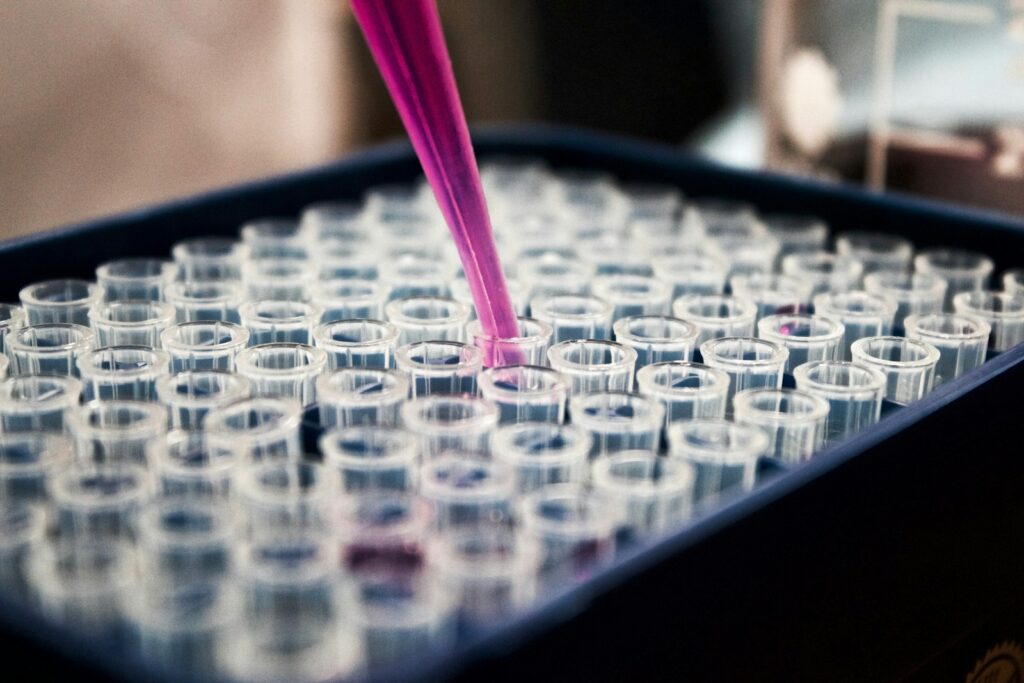
A Certificate of Analysis (COA) is the document a manufacturer or laboratory issues to describe what is actually inside a specific lot of material. For anyone buying wellness compounds, reference standards, or analytical samples, the COA is the only objective evidence connecting the label on the bottle to the contents of the bottle. Without it, you are buying a promise.
The problem is that most consumers — and a worrying number of vendors — treat a COA like a certificate of participation. They glance at a purity number, see something above 98 per cent, and move on. A real COA is a forensic document. It tells you who tested what, how, when, and against what reference. If you cannot follow that chain from the lot in your hand back to the analytical instrument that produced the number, the document is decorative.
This guide is a sceptic’s walkthrough. It assumes nothing about the seller’s honesty and everything about your right to ask questions.
The five things that must be on a real COA
Strip away the branding, the watermarks, and the chromatogram thumbnails. A legitimate COA carries at least five non-negotiable pieces of information. If any are missing, treat the document as marketing, not evidence.
- Lot or batch number. This must match the lot printed on the physical product. A COA for “Lot 2411-A” is meaningless if your vial says “Lot 2503-C”. Mismatched lot numbers are the most common — and most ignored — red flag.
- Assay method(s). The document must name the analytical techniques used (HPLC, LC-MS, FTIR, etc.) along with the test parameters. The US FDA’s dietary supplement rules under 21 CFR Part 111 explicitly require a COA to describe the test methods used, the limits of those tests, and the actual results, not just a summary number.
- Purity result with units. A percentage with no method context (“99.2 per cent pure”) tells you almost nothing. Pure by what assay? Area-under-curve on HPLC at which wavelength? Mass balance? A real COA shows the figure alongside the method that produced it.
- Testing laboratory. The name, address, and accreditation status of the lab that actually ran the analysis — not just the company selling the material. If the seller is also the tester, the document is in-house QC, not independent verification.
- Date of testing. An undated COA is a fundamentally broken document. Analytical samples degrade. A test from 2022 tells you nothing about a vial filled in 2026.
The Consumer Healthcare Products Association’s voluntary guideline on COAs for dietary supplement components sets a similar floor: identification of the material, the lot, specifications tested against, methods used, and actual results.
HPLC, mass spec, FTIR — what each method actually tells you
The three letters after “tested by” matter. Each analytical method answers a different question, and a serious COA will use more than one. Treat any document that relies on a single technique with caution.
HPLC (High-Performance Liquid Chromatography)
HPLC separates the components of a sample by pushing them through a column at high pressure. A detector measures how much of each component comes out, and when. The result is a chromatogram — peaks on a timeline. The main peak should be your target compound; smaller peaks are impurities, related substances, or solvents.
HPLC is excellent at quantifying how much of something is present relative to other things in the sample. It is the workhorse of purity analysis. Its weakness: HPLC alone cannot definitively tell you what the main peak is. A wrong compound with similar physical properties can land in the same retention window and look fine on a chromatogram. Industry primers on small-molecule identity and purity testing are explicit on this point: HPLC confirms relative purity, but identity confirmation needs another technique.
Mass Spectrometry (MS / LC-MS)
Mass spectrometry measures the mass-to-charge ratio of ionised molecules. In plain English: it weighs the molecule. When coupled with HPLC (LC-MS), each peak from the chromatogram is fed into the mass spectrometer and weighed individually.
This is the identity test. If the molecule on your COA has an expected mass of 1,084.3 Da and the MS spectrum shows 1,084.3 Da, that is real evidence of identity. If it shows 1,070.2 Da — say, a molecule missing a fragment — you have the wrong compound, no matter what HPLC says. A COA without any mass-spectrometry data is incomplete for identity purposes.
FTIR (Fourier-Transform Infrared Spectroscopy)
FTIR shines infrared light through a sample and measures which wavelengths are absorbed. The pattern of absorption is a fingerprint of the chemical bonds present. For known reference standards, FTIR is often described as the single most conclusive identity test: the spectrum either matches the reference fingerprint or it does not.
FTIR is less useful as a purity assay (it does not separate components), but it is a strong identity check and a fast way to flag substituted or degraded material.
What “independent third-party testing” actually means
“Third-party tested” is one of the most abused phrases in the wellness market. Strictly, it means the testing lab is a separate legal entity from the seller, has no financial interest in the result, and reports directly. A logo on a website is not third-party testing. A scan of a document the vendor produced themselves is not third-party testing.
The simplest verification: can you, the buyer, look up the COA on the testing laboratory’s own system, using a batch ID, without going through the vendor? Independent labs in this space — for example, Janoshik Analytical, widely cited as an independent COA provider for wellness-grade compounds — publish results to a database that anyone can query directly. If a vendor’s COA cannot be re-verified at source, it is, for practical purposes, unverifiable.
Counterfeit COAs are common enough that the trade press has documented cases of stolen lab letterheads, forged signatures, and fabricated chromatograms. The Office of Dietary Supplements’ joint programme with the US Department of Defense explains why third-party certification matters: independent verification is the only mechanism that closes the loop between label claim and analytical reality.
ISO 17025 — what it is and how to verify it
ISO/IEC 17025 is the international standard for the competence of testing and calibration laboratories. It is the closest thing the analytical world has to a universal badge of trustworthiness. A lab that holds ISO 17025 accreditation has been independently assessed for impartiality, technical competence, measurement traceability, and quality management.
Crucially, ISO does not accredit laboratories itself. National accreditation bodies do, and they in turn are recognised through the International Laboratory Accreditation Cooperation (ILAC) Mutual Recognition Arrangement. This matters because:
- Accreditation is scope-limited. A lab accredited for food residue testing is not automatically accredited for wellness-compound purity. Always check the scope.
- Accreditation expires and can be suspended. Some labs continue to display old certificates after losing accreditation.
- If the accreditation body is not an ILAC MRA signatory, the badge has limited international weight.
To verify: take the lab’s accreditation number, go to the issuing body’s online directory (every ILAC signatory maintains one), and confirm both that the lab is currently accredited and that the test on your COA falls inside the listed scope. If a lab cannot produce an accreditation number, it is not ISO 17025 accredited — full stop.
Red flags: how vendors signal that they do not want you to look closely
After enough COAs, the warning signs become predictable.
- Vendors who will not share the underlying trace. A purity number with no chromatogram or spectrum attached is a claim, not data. A serious supplier will send the full report on request.
- In-house testing only. Internal QC has its place, but if the only document on offer is the seller testing their own product, treat the figure as a sales claim.
- Undated or oddly-dated COAs. No date, a date from years ago, or a date that predates the lot — all disqualifying.
- Lot mismatch. The lot on the vial must equal the lot on the COA. If a vendor sends a “representative” COA from a different lot, you have no evidence about what you actually bought.
- Purity figures of 100.0 per cent. Analytical chemistry does not produce 100.0 per cent by HPLC. Even reference-grade materials usually land in the 98–99.9 per cent range. Anything cleaner than that is a marketing number.
- HPLC only, no mass spec. Purity without identity is half a document. As ConsumerLab has noted, manufacturer-supplied COAs have been caught reporting results from different products, different lots, or — in the worst cases — no analysis at all (a practice known as “dry labbing”).
- Third-party stamps you cannot click on. A real third-party result resolves to a verifiable record. An image file does not.
What a COA does not tell you
Even a perfect COA is a narrow document. It is worth being clear about what it does not establish.
- Safety. A COA confirms identity and purity. It says nothing about whether a substance is safe for any particular use.
- Efficacy. Whether something does what marketing implies is a separate question entirely, generally answered by clinical literature rather than a chemistry document. Independent analysts such as Examine.com exist precisely because purity and effect are different questions.
- Stability after shipping. The COA describes the material at the moment of testing, in the lab. Heat, light, and time during transit can change a sample meaningfully. A 99 per cent pure compound that has sat in a hot warehouse for nine months is no longer 99 per cent pure.
- Whether the vial in your hand is the vial that was tested. This is the fundamental epistemic limit. Lot-level testing is a sample-based inference. Good vendors mitigate this with traceability and tamper evidence; the COA itself cannot.
- Regulatory status. A clean COA does not mean a product is approved for any specific use by any specific regulator — that is a separate matter governed in the UK by the MHRA and equivalent bodies elsewhere.
How to ask a vendor for proper documentation
Most vendors will send what you ask for if you ask precisely. Vague requests get vague answers. A useful checklist when contacting a supplier:
- Ask for the COA for the specific lot you are buying — not a “typical” or “representative” one. Quote the lot number from the listing or invoice.
- Ask for the underlying analytical traces: the HPLC chromatogram, the MS spectrum, the FTIR scan. The PDF of the certificate is the summary; the traces are the evidence.
- Ask which laboratory performed the analysis, and whether the lab is ISO 17025 accredited for the test in question. If yes, ask for the accreditation number so you can verify it on the issuing body’s directory.
- Ask how to verify the COA directly with the laboratory, without going through the vendor. Independent labs maintain public verification systems for exactly this.
- Ask about stability and storage conditions since the testing date. A COA from six months ago is fine if the material has been stored correctly; it is not fine if it has been sitting in transit.
A vendor who answers all five clearly is, at minimum, operating like a serious business. A vendor who deflects, sends a different lot’s document, or claims the questions are unusual is telling you something useful — just not what they intend.
Reading a COA properly is not about being a chemist. It is about insisting that documents mean what they appear to mean. The chain is simple: a specific lot, tested by a named laboratory, using named methods, on a stated date, with results you can re-verify at source. Anything missing from that chain is a gap, and gaps are where bad products live.
Sources
- ISO — ISO/IEC 17025: Testing and calibration laboratories
- International Laboratory Accreditation Cooperation (ILAC) — MRA and Signatories
- US Code of Federal Regulations — 21 CFR Part 111 (cGMP for dietary supplements, including COA requirements)
- United States Pharmacopeia (USP) — Reference Standards programme
- UK Medicines and Healthcare products Regulatory Agency (MHRA)
- Consumer Healthcare Products Association — Voluntary Guideline on Certificate of Analysis for Dietary Supplement Components
- Pacific BioLabs — Small Molecule Identity and Purity Testing (HPLC, LC-MS, FTIR primer)
- ConsumerLab — Trusting Certificates of Analysis from Supplement Manufacturers
- Operation Supplement Safety (US DoD / ODS) — Why Third-Party Certification is Important
- Janoshik Analytical — Independent third-party laboratory (example of an independently verifiable COA provider)
- Examine.com — Independent, evidence-based analysis of supplements and nutrition