Autophagy, explained without the jargon
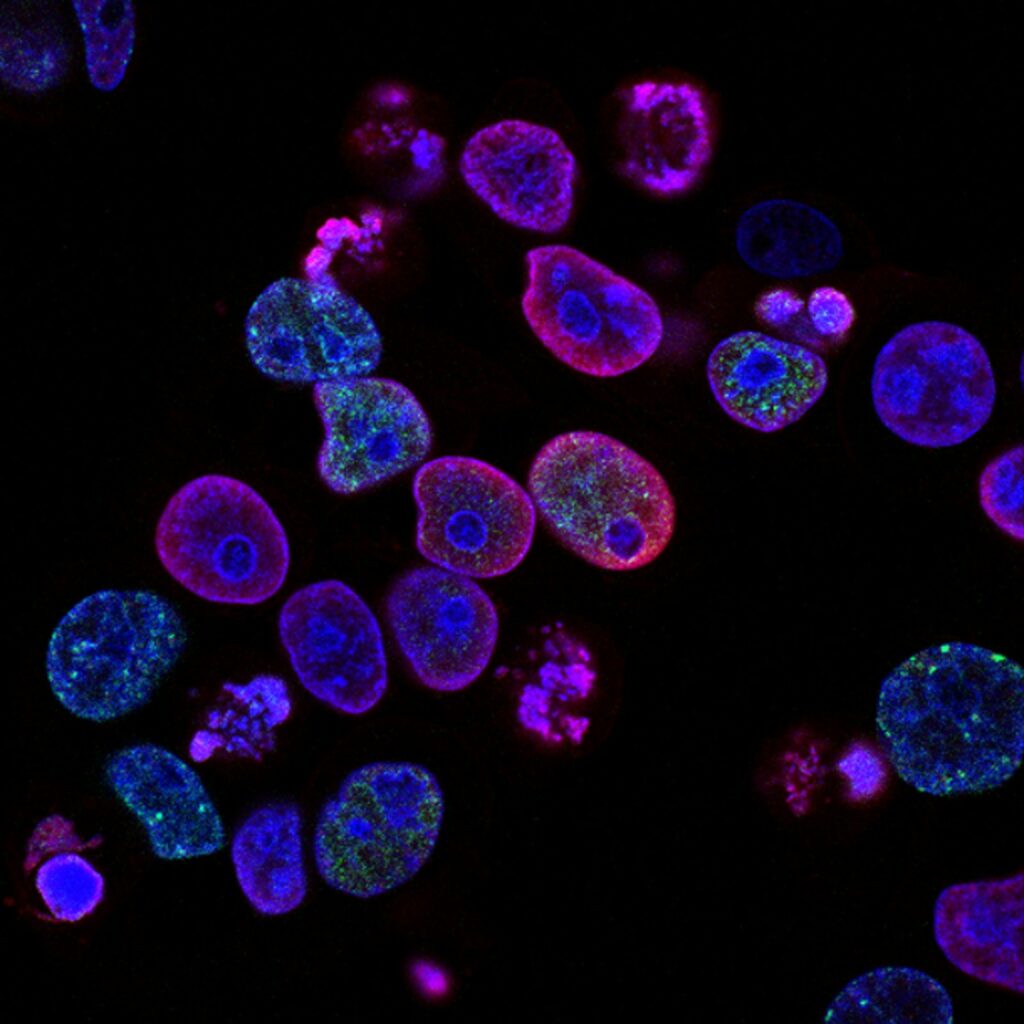
Inside every cell in your body, there is a small fleet of demolition crews. They wander through the cytoplasm looking for things that have gone wrong: a misfolded protein, a dented mitochondrion, a viral particle that slipped past the door. When they find one, they wrap a membrane around it, drag it to a cellular furnace, and melt it down for parts. The parts get reused. The cell goes back to work.
The Greek word for this is autophagy — literally, self-eating. It is one of the oldest housekeeping systems in biology, conserved from yeast to humans, and for most of the twentieth century almost nobody paid attention to it. That changed in the 1990s, when a quiet Japanese cell biologist watched something strange happen inside a starving yeast cell and realised he was looking at a process that keeps every one of us alive.
What follows is a tour of what scientists actually know about autophagy, what they suspect, and what the wellness industry has — predictably — got wrong.
The biology, in plain English
A cell is not a tidy place. Proteins are constantly being built, used, and damaged. Mitochondria, the energy-producing organelles, age and leak. Ribosomes get stuck. Without a way to clear the debris, the cell would clog up and die. The two main clean-up systems are the proteasome, which shreds individual tagged proteins, and autophagy, which handles bigger, messier jobs — whole organelles, protein aggregates, invading microbes.
The cleanest description of the process comes from Noboru Mizushima, one of the field’s leading figures, who described autophagy as a system that “delivers cytoplasmic constituents to the lysosome” through “sequestration, transport, degradation, and utilisation of degradation products” (Mizushima, 2018). In other words: gather the rubbish, transport it to the recycling plant, break it down, send the components back into circulation.
The mechanics are oddly elegant. When a cell decides to clear something out, a flat sheet of membrane begins to curve around the cargo. This sheet, called the phagophore, extends until its edges meet, forming a sealed double-membrane bubble — an autophagosome. The autophagosome then fuses with a lysosome, the cell’s acidic recycling compartment, and enzymes inside break the contents down into amino acids, lipids, and sugars that the cell can use again.
It is, in effect, a closed-loop recycling system that runs in every nucleated cell, all the time, at a low baseline rate — and ramps up sharply when the cell is stressed.
How we found out: the yeast in the microscope
The story of how autophagy was finally taken seriously belongs to Yoshinori Ohsumi, who won the 2016 Nobel Prize in Physiology or Medicine for the work (Nobel Assembly, 2016).
In the early 1990s, Ohsumi was working in a small lab in Tokyo with limited resources, studying baker’s yeast — an organism most biologists at the time considered too simple to be interesting for higher cell biology. He reasoned that if yeast performed autophagy, he should be able to see the evidence by starving the cells and disabling the enzymes that would normally finish off the recycled material. The waste should pile up.
It did. Under the light microscope, he watched debris accumulate inside the yeast’s vacuole — a vivid, visible proof that the cells were eating themselves. He then did the patient, painstaking work of identifying the genes that controlled the process, the so-called ATG genes. Almost all of them turned out to have direct equivalents in human cells.
This is the great trick of yeast biology. As a 2017 perspective in PNAS put it, his baker’s-yeast experiments handed the rest of biology a complete molecular parts list for a process nobody had known how to study (Harnett & Klionsky, PNAS 2017).
Three flavours of self-eating
Autophagy is not one process but three, distinguished by how the cargo gets to the lysosome.
Macroautophagy
This is the form most people mean when they say “autophagy”. A phagophore grows around the cargo, forms an autophagosome, and fuses with a lysosome. It can engulf large structures — whole damaged mitochondria, in a sub-variant called mitophagy, or aggregates of misfolded protein.
Microautophagy
Here the lysosome itself does the work. Its membrane folds inward, pinches off a small piece of cytoplasm, and digests it directly. It is the least well understood of the three.
Chaperone-mediated autophagy
The most selective form. Proteins carrying a specific five-amino-acid tag are recognised by chaperone proteins and ferried, one at a time, through a channel in the lysosomal membrane. It allows the cell to remove a particular damaged protein without touching anything else.
All three exist in human cells. All three change with age, generally declining.
What the literature actually shows
The strongest evidence for why autophagy matters comes not from glossy promises but from what happens when it breaks.
In neurons, autophagy is the primary route for clearing aggregate-prone proteins — the same molecules that accumulate in Alzheimer’s, Parkinson’s, and Huntington’s disease. A 2024 review in Neuron summarising decades of work concluded that many neurodegeneration-associated proteins are autophagy substrates and that disease-causing mutations frequently impair autophagy at multiple stages (Bourdenx et al., Neuron, 2024). Neurons live for decades without replacement, so they depend on autophagy more than almost any other cell type. When the system falters, debris builds up. The pattern is now central to how researchers think about age-related brain disease.
In ageing more broadly, the case is built largely on animal models. Frank Madeo and colleagues, reviewing the evidence in the Journal of Clinical Investigation, argued that autophagy plays an essential role in life-span extension across yeast, worms, flies, and mice — and that interventions known to extend lifespan, from dietary restriction to rapamycin, converge on it (Madeo et al., JCI, 2015). The most direct mammalian evidence comes from Beth Levine’s lab, which engineered mice with a single mutation that increases basal autophagy. Those mice lived significantly longer and had fewer age-related pathologies than their unmodified siblings (Fernández et al., Nature, 2018).
The link to immunity is real too. Autophagy is one of the ways cells clear intracellular pathogens, and some viruses have evolved specifically to suppress it.
The fasting and longevity claim: what is solid, what is overstated
Here is where the science and the wellness industry part company. In the past decade, autophagy has become a kind of folk-religious concept — invoked to justify everything from sixteen-hour eating windows to multi-day water fasts to expensive supplements that claim to “activate” it.
The honest summary is this: the upstream evidence is strong, the downstream evidence in humans is thin, and the dose-response question is wide open.
What is well established: nutrient deprivation, low insulin, and low amino-acid availability all activate autophagy in cells and in animals. Caloric restriction extends life in many model organisms, and at least part of that effect runs through autophagy. The CALERIE trial — the first proper randomised controlled trial of sustained caloric restriction in non-obese adults — found that two years of roughly 12 per cent calorie reduction (the target was 25 per cent) modestly slowed a DNA-methylation marker of biological ageing called DunedinPACE, with an estimated 2–3 per cent slowing in pace-of-ageing measures (Waziry et al., Nature Aging, 2023). That is a real effect. It is also a small one, and it was measured in a methylation surrogate, not in lifespan or in autophagy markers directly.
The smaller intermittent-fasting trials are more limited still. Elizabeth Sutton and colleagues, in one of the cleanest human studies on the timing of meals, showed that an early time-restricted feeding schedule improved insulin sensitivity and blood pressure in men with prediabetes even when their weight was held constant (Sutton et al., Cell Metabolism, 2018). It is a striking metabolic result. It is not, however, a measurement of autophagy. Almost no human trial has directly measured autophagic flux — the rate at which cells actually run the cycle — because the techniques for doing so in living people are still primitive.
So when a popular article confidently announces that a sixteen-hour fast “switches on autophagy” at hour twelve, the right response is mild scepticism. The animal data suggest fasting raises autophagy. The human data show that fasting changes metabolic markers. The bridge between those two statements — exactly how much fasting, in exactly which tissues, produces exactly how much autophagic activity, and whether that activity translates into health outcomes — is still mostly conjecture.
Where the field is heading
The questions researchers are actively trying to answer in 2025 and 2026 are more interesting than the ones that get repeated on podcasts.
The first is measurement. There is no easy, non-invasive way to see how much autophagy is happening inside a living human’s liver or brain. Until that changes, claims about what “increases autophagy” in people will remain inferential.
The second is selectivity. Bulk autophagy and selective forms — mitophagy, aggrephagy, lipophagy — appear to have different roles in different tissues. Generic “more autophagy” may be the wrong target. Generic less may be, too: in some cancers, autophagy helps tumours survive.
The third is the ageing question itself. Autophagy declines with age, but it is unclear whether that decline is a cause of ageing or a consequence of it, and whether nudging it back up in older humans would do what it does in young mice. Beth Levine’s mouse work suggests it might. Confirming that in people is a far harder experiment.
None of this means autophagy is not important. It is one of the most fundamental processes in cell biology, and the more it is studied, the more its fingerprints appear across ageing, immunity, and neurodegeneration. It is simply to say that the gap between “well-characterised in yeast” and “actionable in your kitchen” is still very wide — and that the people most worth listening to about autophagy tend to be the most cautious about what they claim.
Ohsumi himself, accepting the Nobel, was characteristically modest. He had spent his career, he said, watching something most people had ignored. The interesting work, he suggested, was only just beginning.
Sources
- Nobel Assembly at Karolinska Institutet. The Nobel Prize in Physiology or Medicine 2016 — Press Release, 3 October 2016. nobelprize.org
- Mizushima, N. “A brief history of autophagy from cell biology to physiology and disease.” Nature Cell Biology, 20(5): 521–527, 2018. PubMed 29686264
- Harnett, M. M. et al. “Autophagy wins the 2016 Nobel Prize in Physiology or Medicine: Breakthroughs in baker’s yeast fuel advances in biomedical research.” PNAS, 2017. pnas.org
- Bourdenx, M., Gavathiotis, E., Cuervo, A. M., et al. “Autophagy, ageing, and age-related neurodegeneration.” Neuron, 2024. cell.com/neuron
- Madeo, F., Zimmermann, A., Maiuri, M. C., Kroemer, G. “Essential role for autophagy in life span extension.” Journal of Clinical Investigation, 125(1): 85–93, 2015. PubMed 25654554
- Fernández, Á. F., Sebti, S., Wei, Y., et al. “Disruption of the beclin 1–BCL2 autophagy regulatory complex promotes longevity in mice.” Nature, 558(7708): 136–140, 2018. PubMed 29849149
- Sutton, E. F., Beyl, R., Early, K. S., Cefalu, W. T., Ravussin, E., Peterson, C. M. “Early time-restricted feeding improves insulin sensitivity, blood pressure, and oxidative stress even without weight loss in men with prediabetes.” Cell Metabolism, 27(6): 1212–1221, 2018. PubMed 29754952
- Waziry, R., Ryan, C. P., Corcoran, D. L., et al. “Effect of long-term caloric restriction on DNA methylation measures of biological ageing in healthy adults from the CALERIE trial.” Nature Aging, 3: 248–257, 2023. nature.com